Why the Best Room Designers Do Less
acoustic designer acoustic treatment architect av integrator construction planning home theater design hvac sound isolation listening room design mechanical engineer recording studio design room acoustics sound isolation sound isolation assessment sound isolation coordination sound isolation design sound isolation specialist soundproof studio soundproofing specialist design team spys designs structural engineer Nov 09, 2026SOUND ISOLATION DESIGN · SPYS DESIGNS
Depth Follows Fascination: Why Sound Isolation Is Rarely a Specialist's Specialty
If you are building a home theater, a listening room, or a recording space, you will almost certainly end up with more than one expert on your project. An architect. An acoustic designer. An AV integrator. Structural and mechanical engineers when the building calls for them. And, if the room has to keep sound in or keep it out, a sound isolation designer.
It is natural to wonder who should lead, and whether one person could cover all of it. After years of working alongside these specialists, my honest answer is a kind one. The strongest teams I see are made of people who each do less.
Several experts, all starting at once
One thing that surprises homeowners is that these specialists do not work in a neat line. The architect is drawing, the acoustic designer is thinking about how the room will sound, the integrator is planning cable paths, and the engineers are checking loads and ventilation, all in the same few weeks. That overlap is normal. It is also the reason no single person can be excellent at every part of it.
That is not a flaw in anyone. It is simply how expertise works. My goal here is to make the hiring conversation feel lighter.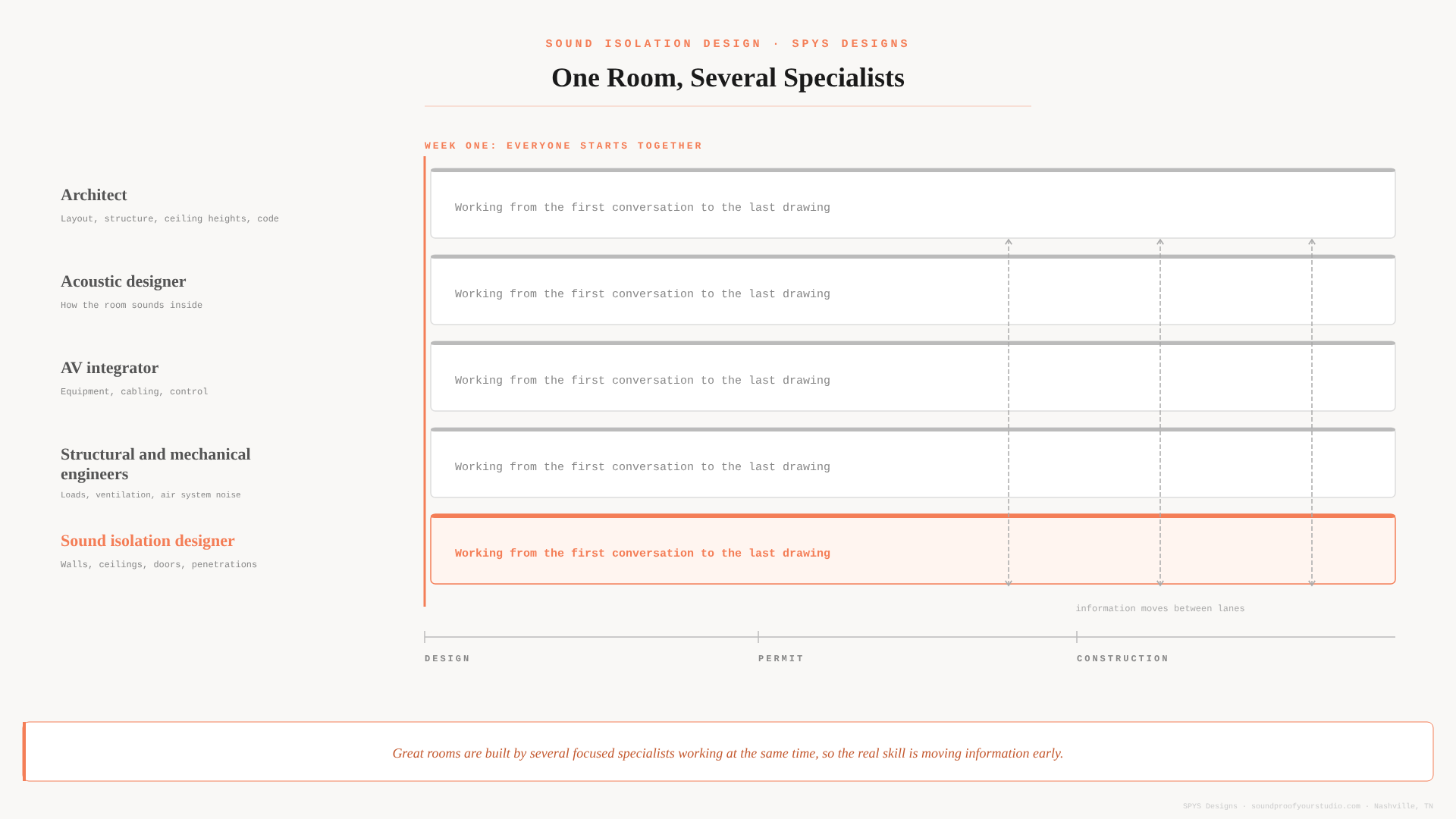
Who does what
- Architect: layout, structure, ceiling heights, code, and the space the mechanical systems need.
- Acoustic designer: how the room sounds inside, including reflections, absorption, diffusion, and bass behavior.
- AV integrator: equipment selection, cabling, wiring sequences, and control, across hi-fi, theater, and studio rooms.
- Structural and mechanical engineers: the loads the building carries and the ventilation and air systems the room needs.
- Sound isolation designer: keeping sound from leaving or entering the room, through walls, ceilings, doors, and every penetration. Ensuring the mechanical/HVAC design is quiet.
Depth follows fascination
Here is the idea I keep coming back to. People go deep on what fascinates them, and nobody has unlimited hours.
Sound isolation is not a topic most people find exciting. I say that with love, because I find it endlessly interesting. But if you are building a business around room acoustics, your evenings go to room acoustics. If your passion is AV, you spend your spare time on AV. So most specialists learn sound isolation well enough to do their own job well, and then put their remaining attention where their curiosity lives. That is a sensible use of a limited life.
People go deep on what fascinates them, and nobody has unlimited hours.
I should be clear that this is an observation, not a rule. It is the pattern I have noticed, and there are always exceptions.
It also explains something about the best firms. As a design firm gets better, its experts tend to do less and less. They know they can only reach a very high level by focusing on one thing, maybe two, and certainly not five to ten.
It runs in both directions
I am the same way. I know enough about room acoustics to know when to bring in a specialist, and not enough to do that person's job at their level. The same is true for AV. My focus is sound isolation, and that is where my hours and my curiosity go. It is the reason I coordinate with the specialists on your team instead of trying to become them.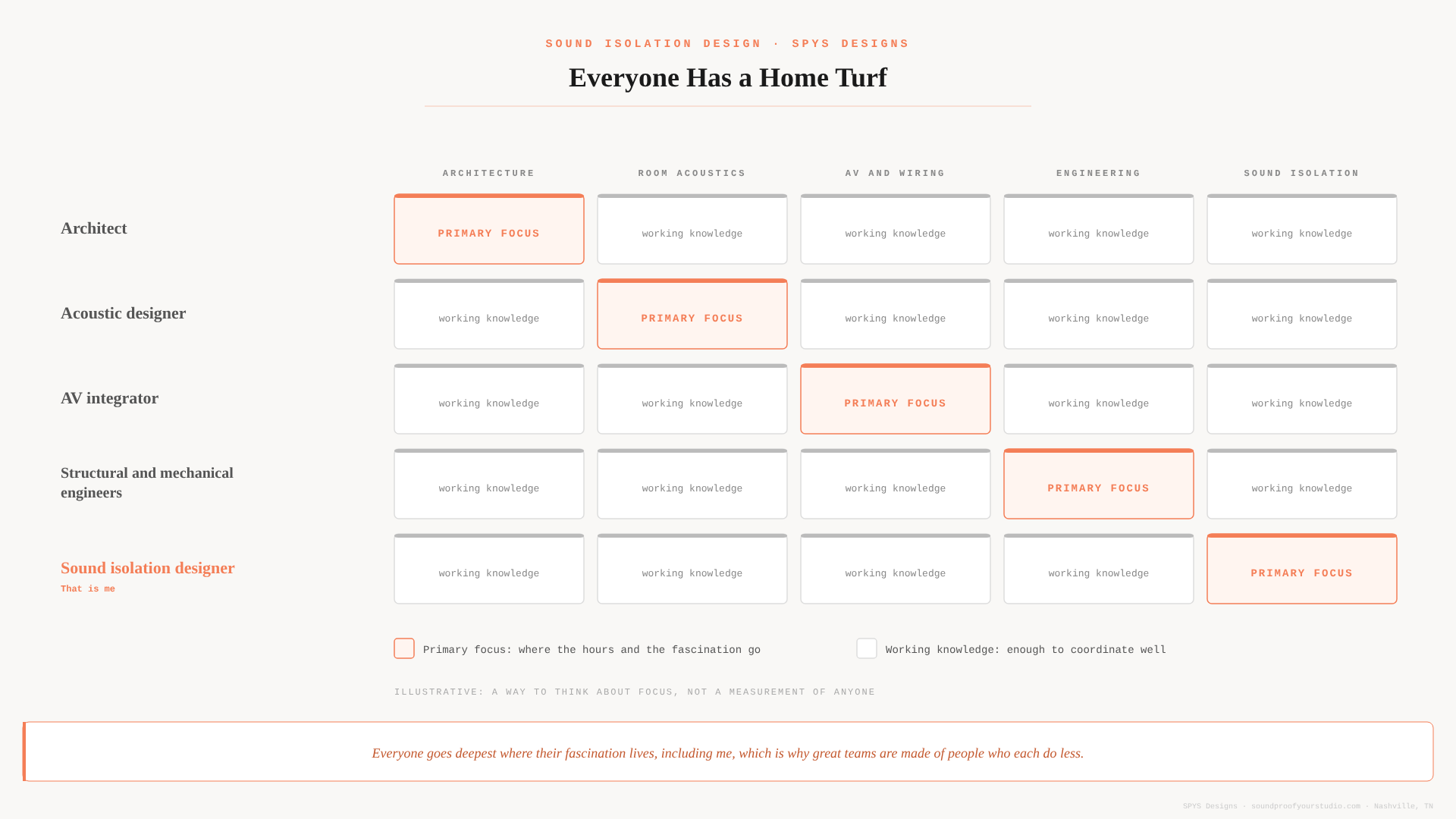
A ceiling as one small example
Here is a small, general example of how focus shows up in practice. Imagine someone wants to hang acoustic treatment from a ceiling. That treatment has weight, it needs hanger locations, and it often needs backing built into the framing. The isolation design needs to know all of that early, because it shapes how the ceiling is framed.
A specialist whose attention is on how the room sounds will not always think about ceiling framing, because it is not where their attention lives. Nobody did anything wrong. The information simply has to travel between specialists, and everyone is working at the same time, so the answer is early conversation more than any perfect order of operations.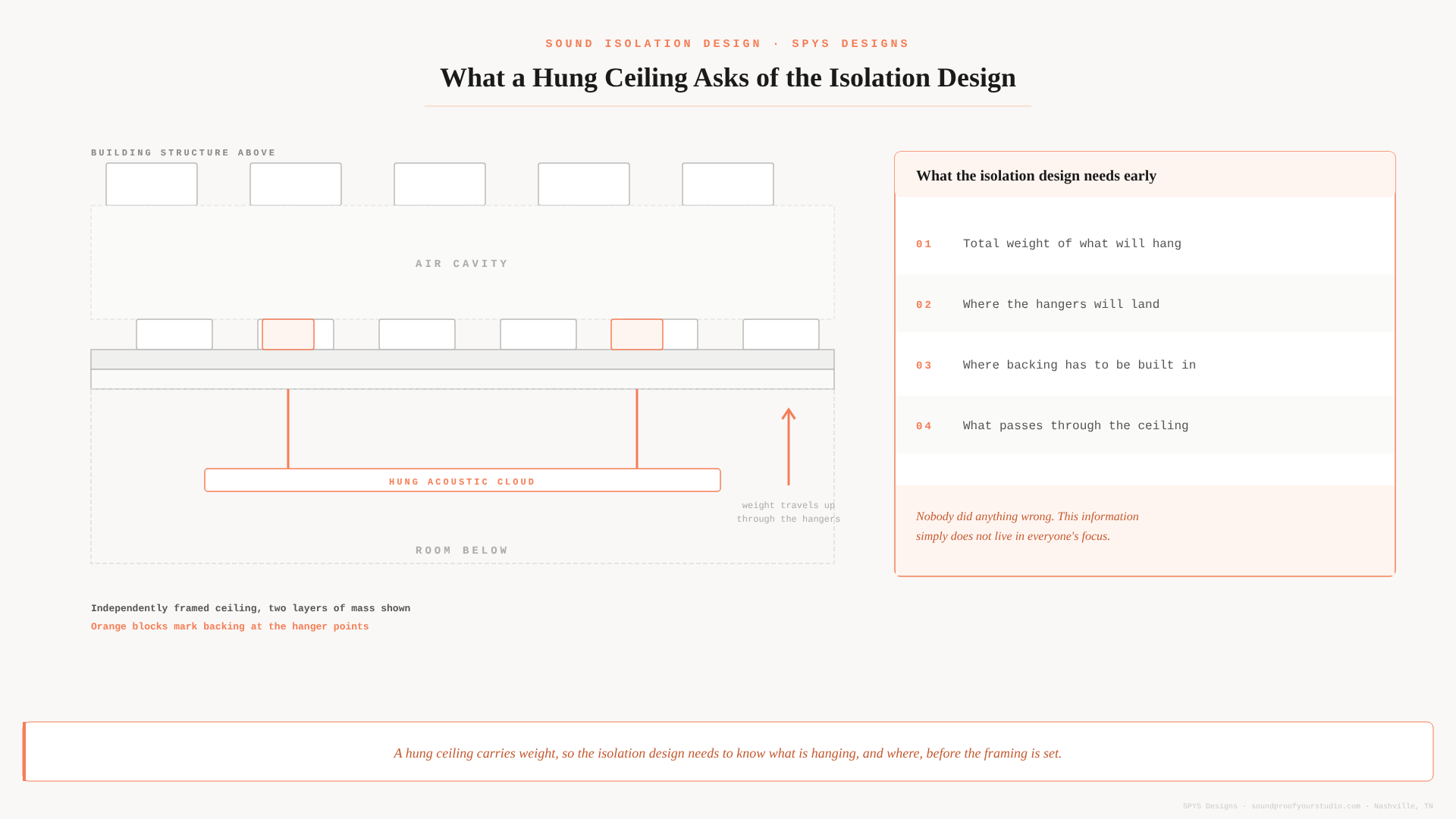
When the gap matters, and when it does not
For many rooms, a generalist's working knowledge of sound isolation is plenty. The gap shows up when the stakes are high: a drum room, a theater beside a bedroom, a recording space with close neighbors, or a hi-fi room where silence is part of the performance. If your room has to perform at that level, it is worth bringing in someone who has gone deep, and bringing them in early.
What we do
At SPYS Designs we design sound isolation, and nothing else. We coordinate with the specialists you already have, and when a project needs a structural or mechanical engineer, we help you find one. That focus is the whole point.
|
Planning a room that has to perform at this level? Start with a Sound Isolation Site Assessment. It is the clearest first step for a theater, listening room, or recording space. |
Wilson Harwood
Sound Isolation Designer and Principal, SPYS Designs
Are you ready to move from planning to building?
Book a Soundproof Planning Call to determine whether your studio is feasible, what it will realistically cost, and what path makes sense for your space.
Categories
All Categories #acousticcloud #acoustics #acoustictips #acoustictreatment #audioengineering #audioupgrades #basementstudio #basstraps #construction innovation #constructiontips #creativespace #dit #diyordit #diyprojects #diystudio #diystudiobuild #ductlessminisplit #garagestudio #homeimprovement #homepodcaststudio #homerecording #homerecordingstudio #homestudio #homestudiobuild #homestudiogoals #hometheaterdesign #hush frame rafts #hvacnoise #mcveyacoustics #mixing #musicindustry #musicproducer #musicproducerlife #musicproduction #musicroom #musicspace #musicstudiodesign #podcast #podcastlife #podcastsetup #podcaststudio #professionalaudio #quiet spaces #quiethomeoffice #quietroom #quietspace #recordingstudio #recordingstudiobuild #recordingstudiosetup #recordingtips #roomacoustics #silicone soundproofing #sounddesign #soundenhancement #soundisolation #soundproofceiling #soundproofdoors #soundproofing #soundproofingexpert #soundproofingformusicians #soundproofingmistakes #soundproofingresources #soundproofingtips #soundproofstudio #soundproofwalls #soundproofyourspace #studioacoustics #studiobuild #studioconstruction #studiodesign #studiodiy #studioinspiration #studiolife #studiosetup #studiosound #studioupgrade #vibration reduction #vocalbooth 1/4 wavelength rule 101 2025 studio build 2x4 3d model a237 resilmount clip absorption absorption coefficient access doors for hvac accessory dwelling unit acoustic acoustic cauk acoustic caulk acoustic clips acoustic cloud acoustic construction acoustic consulting acoustic cualk acoustic design acoustic design for contractors acoustic design strategy acoustic designer acoustic duct liner acoustic engineering acoustic fields acoustic foam acoustic gobos acoustic holes acoustic hvac acoustic insulation acoustic isolation acoustic materials acoustic panel lighting acoustic panels acoustic performance acoustic room design acoustic sealant acoustic soffit design acoustic testing acoustic treatement acoustic treatment acoustic treatment cost acoustic treatment tips acoustic ventilation box acoustic windows acoustics acoustics for garage studio acoustics vs soundproofing acousttic putty adu adu construction adu design adu recording studio adu soundproofing adu studio aes67 affordable recording studio affordable soundproofing affordable studio setup air space air speed calculation air velocity airflow airgap airlock airtight airtight construction airtightness amroc angled walls aoip apartment architect architect coordination architect vs sound isolation designer architect vs soundproofing expert architect vs soundproofing expert home studio soundproofing astm e90 atmos home studio atmos speaker setup attic design audio engineering audio gear protection audio interface ethernet audio networking audio over cat5 audio over cat6 audio over ethernet audio recording gear audio setup audio studio wiring audiophile room design av integrator avb avb audio avoiding soundproofing mistakes backer rod backset backyard recording studio backyard room backyard studio backyard studio design baffle box baffle box construction baffle box design baffle box soundproofing baffle box tutorial baffle box ventilation baffle boxes balanced power systems band rehearsal room base basement basement ceiling soundproofing basement makeover basement recording studio basement studio basement studio design basement studio soundproofing basics bass bass isolation bass problems bass traps bathroom bedroom recording studio beginner music producers beginner soundproofing bid set plans block noise blueprints bolt area bonello criterion boner bottom plate brick budget budget calculator budget soundproofing budget stage budget studio build build a home studio budget build a soundproof room build a soundproof studio buildability buildable design builder builder collaboration builder coordination building acoustics building code building codes building coordination building design building envelope building permits building science building soundproof windows buy vs build soundproof windows cad calculator california adu cantered walls carbon dioxide carpet glue cat5 cat6a cable cathedral ceiling studio cathedral ceilings caulking ceiling assembly ceiling assembly design ceiling cloud panels ceiling construction ceiling height ceiling load capacity ceiling sound isolation ceiling support cfm cfm and fpm clarity call clean power for audio gear client projects client work clip and channel system cmu walls code research coincidence effect coincidence frequency comb filtering communicating doors compact studio design concrete concrete blocks concrete slab construction bid construction budget construction budgeting construction coordination construction cost construction cost savings construction costs construction documents construction drawings construction estimate construction inspection construction mistakes construction planning construction plans construction sequencing contractor coordination contractor installation tips contractor vs designer contractors control control room design control room setup cooling load coordination cost cost estimating cost-effective soundproofing covenants creative freedom creative space creative studio lighting creative workspace cubic feet per minute custom acoustic treatment custom studio dante dante audio dante vs avb decibel levels decibel x decibels decibelx deciboard decoupled ceiling decoupled wall decoupled wall framing decoupled walls decoupling decoupling for soundproofing dehumidification dehumidifier dehumidifier system design build detached adu diaphragmatic diaphragmatic absorbers diffraction diffusion diy diy acoustic panels diy baffle box diy mistakes diy music room diy music studio build diy music studio ideas diy recording studio diy soundproof boot diy soundproof office diy soundproof studio diy soundproofing diy studio diy studio build diy studio design diy studio mistakes diy studio setup diy studio soundproofing does green glue work dolby atmos dolby atmos studio door door hardware door seals double drywall double pane windows double stud walls double wall double wall system double walls double-stud wall dream home studio tour drum lessons drum room drum room design drum room soundproofing drum soundproofing drum studio drums studio drywall drywall soundproofing duct chimneys duct silencers duct sizing ducted mini split ducting ductless mini split ductulator ductwork eadphone mix troubleshooting easements egress window electric guitar studio build electrical electrical design electrical in studios electrical plan for studios emi and rfi interference solutions energy efficiency energy recovery ventilator eq adjustment erv erv for home office erv for studio ventilation erv system ethernet ethernet audio setup europe existing ceilings existing floors existing walls exterior wall exterior windows extreme soundproofing face velocity acoustics fiberglass fiberglass insulation field coordination firestops flanking paths floating ceiling system floating floor floating wall construction floating walls floor floor design florida soundproofing flush mounted wiring flush mounting flush mounting speakers flutter echo foam foam panels foldback system framing free soundproofing guide freestanding acoustic panels frequencies fresh air frost king weather stripping furring channel garage garage conversion garage conversion studio garage studio garage studio build garage studio conversion garage studio soundproofing genie clips genieclip genieclip lb genieclip lb3 gik acoustics gik acoustics setup gobo panels green building green glue green glue compound green glue review green glue soundproofing ground loops prevention guitar amp iso cabinet guitar room setup hardwood floor harwood floor hat channel hat channel system hat channel wall system hat channels hat channels and loft floating floor headphone mix system hearback vs behringer heating and cooling height limits helmholtz resonators helmholtz slot resonator hi-fi listening room high performance build high performance room design hiring hiring an architect historic building studio hoa home music studio home music studio setup home office soundproofing home office studio home recording home recording studio home recording studio build home recording studio build it like the pros home recording studio design home recording studio tips home recording tips home soundproofing home studio home studio acoustics home studio advice home studio build home studio construction home studio design home studio electrical setup home studio gear home studio grounding home studio guide home studio hvac home studio isolation home studio lighting home studio noise control home studio power solutions home studio setup home studio soundproofing home studio tips home studio transformation home studio vibe home studio wiring guide home theater home theater design home theater soundproofing home voiceover studio how to build how to build a baffle box how to build a home studio how to build a recording studio how to soundproof how to soundproof a garage how to soundproof a room how to soundproof a studio hrv humidity humidity control hush frame rafts hushframe rafts hvac hvac and acoustics hvac coordination hvac design hvac ductwork hvac engineering hvac for recording studios hvac for soundproof rooms hvac for studio soundproofing hvac for studios hvac noise hvac noise control hvac sound isolation hvac soundproofing i-b3 ib-1 clips ib-3 clips icf indo window inserts insulated concrete forms insulation insulation comparison iso store doors isolated concrete slab isolated ground receptacles isolated volume isolation clips isolation hangers isolation room design isolation system design jam room ideas junction boxes kitchen knauf ecose insulation lab tested sound isolation laminate glass laminated glass latent cooling load latent load led lights for studio lede listening position listening room listening room design live room local codes log cabin louden low frequencies low frequency isolation low frequency noise manual j calculation studio marvin windows mason industries masonry mass mass air mass resonance mass and airtightness mass decoupling airtightness mass loaded vinyl mass spring mass system master handbook of acoustics mastering mastering studio mechanical engineer mechanical engineering mechanical system metal roof mini split mini split hvac mini-split hvac studio minisplit mistakes mitsubishi mixing mixing and mastering mixing low end mlv modes moisture moisture control moisture management mold monitors mortise lockset mortised lockset mr cool multi-room studio music production music production setup music production space music production studio music production studio build music room inspiration music studio build music studio construction music studio design music studio humidity control music studio inspiration music studio setup music studio tips musician productivity nc levels nd isolator clip neighbor noise solutions new zealand nfrc rating no permit studio build noise blocking techniques noise control noise criteria noise criteria curve noise criterion curve noise isolation noise reduction noise reduction ventilation noise-free home studio noisy neighbors non-environment room not diy hacks oitc ratings orfield laboratories outsulation assembly overlays owens corning 703 permits permitting phased construction philip newell philips hue studio setup pipewrap planning stage plans plaster play drums anytime plumbing plywood podcast podcast studio at home podcast studio setup poly barriers polyurethane foam portfolio power conditioners for studios practice room pre-design research prefrabricated shed pretty good house prevent sound leakage pro studio build proaudiola producer production room professional home studio professional soundproofing professional studio build professional studio design professional studio design tips professional studio lighting project management project planning property setbacks putty pads q-sys q-sys by qsc qrd 13 quadratic residue diffuser quiet home quiet hvac for studio quiet hvac for studios quiet hvac system quiet ventilation quiet workspace quietrock r value rebond foam recorded documents recording room tips recording session tips recording setup tutorial recording studio recording studio acoustics recording studio at home recording studio build recording studio cost recording studio design recording studio door recording studio electrical recording studio guide recording studio hvac recording studio hvac design recording studio old building recording studio planning recording studio setup recording studio soundproofing recording studio tips recording studio without permits recording tips redco reduce noise at home reflection free zone rehearsal room relative humidity remote work setup resilient channel resilient channel vs genie clips revit revit details rew rfz risc clips rock wool insulation rockwool rockwool safe and sound rockwool vs fiberglass rod gervais roof roof design roof eave detail roof framing room acoustics room modes room ratios room size room software room treatment room within a room room within a room calculator room within a room soundproofing safe n sound sand sand filled saxophone practice room sbir scandinavian studio design scatter plates schroeder diffuser sensible cooling load sensible load sepmeyer serious intent setbacks shed shed studio build shielded cable setup show house silent ventilation system silentfx drywall simple soundproofing single pane windows site inspection site research sketchup sliding door small rooms small space studios small studio setup snakes soffit mounting speakers solid core door solid core doors sonarworks sonopan sooundproof soudproofing sound isolated room sound isolated room design sound isolation sound isolation assembly sound isolation assessment sound isolation calculator sound isolation case study sound isolation coordination sound isolation design sound isolation designer sound isolation details sound isolation for studios sound isolation inspection sound isolation plan sound isolation planning sound isolation plans sound isolation requirements sound isolation specialist sound isolation systems sound isolation techniques sound isolation tips sound isolation windows sound reflections sound transmission sound transmission class sound treatment soundbreak soundgrid soundgrid waves soundid reference soundproof soundproof adu soundproof air vent soundproof basement soundproof beam soundproof beams soundproof bedroom soundproof booth soundproof budget soundproof ceiling soundproof ceilings soundproof construction soundproof curtains soundproof door soundproof door cost soundproof door installation soundproof door seals soundproof doors soundproof doors and walls soundproof drum room soundproof ducts soundproof expense soundproof fails soundproof floor soundproof floors soundproof garage soundproof garage conversion soundproof glass soundproof home office soundproof hvac soundproof materials soundproof method soundproof on a budget soundproof pipes soundproof room soundproof room cost soundproof room design soundproof shed soundproof sliding glass door soundproof studio soundproof studio airflow soundproof studio build soundproof studio cost soundproof studio design soundproof studio ideas soundproof studio planning soundproof studio shed soundproof studio tour soundproof underlayment soundproof wall soundproof wall assemblies soundproof wall assembly soundproof walls soundproof window soundproof window insert soundproof window installation soundproof windows soundproof windows inc soundproof workshop soundproof your studio soundproofing soundproofing basics soundproofing budget soundproofing calculator soundproofing cons soundproofing contractor soundproofing cost soundproofing cost estimator soundproofing costs soundproofing design soundproofing designer soundproofing diy soundproofing education soundproofing expert soundproofing failures soundproofing for musicians soundproofing fundamentals soundproofing garage soundproofing garage door soundproofing hvac soundproofing insulation soundproofing materials soundproofing mistakes soundproofing mistakes to avoid soundproofing myths soundproofing on a budget soundproofing pros soundproofing small rooms soundproofing stores soundproofing strategy soundproofing techniques soundproofing tips soundproofing walls soundproofing workshop soundproofing101 sounproofing space saving soundproofing speaker calibration speaker placement specialist design team spl meter splayed walls spray foam spys designs staggered studs standing waves star grounding star grounding tips stc stc rating stc rating windows stc ratings stop neighbor noise structural engineer structural engineering studio acoustic treatment studio acoustics studio acoustics vs soundproofing studio architect studio audio setup studio bricks studio budget studio budget planning studio build studio build cost studio build guide studio build journey studio build mistakes studio build tips studio builder studio builder tips